Why Some Chargers Support Fast Charging, and Others Don’t?
Every day life increasingly depends on fast, reliable charging for smartphones, tablets, and other devices. Yet not all chargers deliver the same speed, leaving users frustrated when a phone takes hours to reach full power. Understanding why some chargers support fast charging while others lag behind helps you make better decisions when buying or upgrading your accessories. Factors such as power output, communication protocols, and internal technology all influence charging speed. In this article, we will explore the technical and practical reasons behind fast charging and how to optimize your setup.
Power Output Capability: The Foundation of Speed
Understanding Wattage (W) and Voltage (V)
The primary determinant of charging speed is a charger’s power output, measured in watts (W), which is calculated as voltage (V) multiplied by current (A). Higher wattage chargers can deliver more energy in the same amount of time, allowing devices to charge faster. For example, a standard 5W charger will take considerably longer than a 20W charger to fill the same battery. Voltage and current ratings must also match the device’s requirements to achieve safe fast charging. Paying attention to the charger’s power specification is essential for anyone seeking optimal charging efficiency.
Why Standard Chargers Have Limited Power
Many chargers that come bundled with devices are intentionally limited in wattage to reduce heat and protect battery longevity. Standard chargers provide a safe, moderate rate of power delivery that is sufficient for overnight charging but slow during the day. Using a higher-capacity charger designed for your device can drastically cut charging times. However, delivering more power safely requires both proper internal components and compatible cables. Recognizing the limitations of standard chargers explains why users often see slower charging despite owning a modern device.
Charging Protocols: The Communication Language
Common Fast Charging Standards (e.g., PD, QC, VOOC)
Fast charging is not just about raw power; it also involves communication between the charger and the device. Protocols like Power Delivery (PD), Quick Charge (QC), and proprietary solutions like VOOC allow devices to negotiate higher voltage or current safely. Without compatible protocols, even a high-wattage charger cannot deliver faster charging speeds. These standards ensure that the device controls the flow of electricity, preventing overheating or overcharging. Understanding protocol compatibility is key to achieving real-world fast charging benefits.
How Devices and Chargers Negotiate Speed
When a charger is connected, the device and charger exchange signals to determine the safest and fastest possible power transfer. If either component does not support fast charging protocols, the device defaults to a slower, standard charging rate. Some chargers automatically adjust their output depending on the device’s requirements. This dynamic negotiation ensures both safety and efficiency. Being aware of these interactions can explain why two chargers of similar wattage might perform differently in practice.
Internal Component Quality and Technology
The Role of GaN (Gallium Nitride) in Efficient Power Delivery
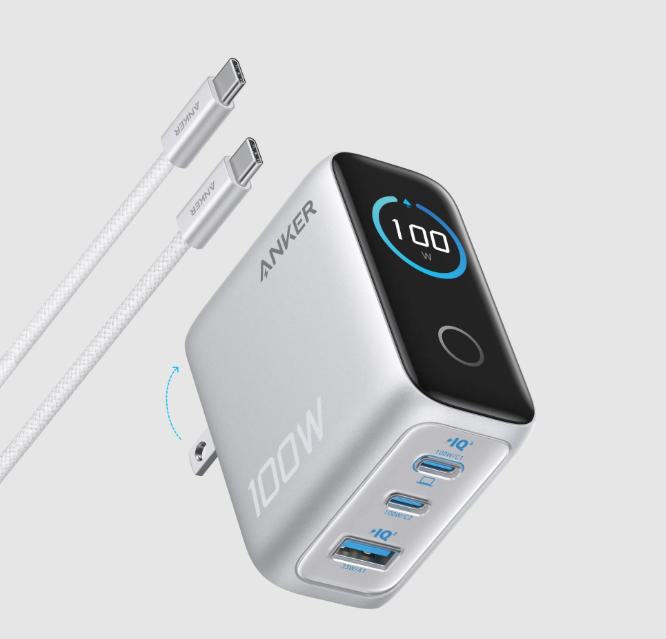
Modern chargers increasingly use GaN technology to provide higher efficiency in a compact form factor. GaN transistors handle higher voltages and currents with less heat than traditional silicon components, allowing chargers to deliver more power safely. This technology is especially important for fast charging multiple devices simultaneously, such as when using a usb fast charger. A high-quality Anker charger employing GaN technology provides reliable fast charging while staying cool and portable. Using such a charger ensures consistent performance for demanding devices without the risk of overheating or degradation.
Quality of Internal Circuits and Heat Management
Beyond GaN, the overall quality of internal circuits and heat management plays a critical role. Inferior components may struggle to maintain high output for long periods, leading to slower charging or safety shutdowns. Well-designed chargers include protection circuits for overcurrent, overvoltage, and overheating, ensuring long-term durability. Efficient heat dissipation prevents throttling and maintains consistent charging speeds. Investing in quality internal components guarantees that the charger performs as advertised and extends its useful life.
See also: How 5G Technology Will Transform Mobile Gaming
Cable Quality and Specifications
Even the best charger cannot compensate for a poor-quality cable. High-resistance cables reduce charging speed, while certified cables with proper shielding maintain full power transfer. USB-C cables supporting high amperage are essential for many fast-charging protocols, including PD. Users should avoid cheap or damaged cables that could compromise speed and safety. Ensuring your cable matches the charger’s capabilities is a simple but often overlooked step toward faster, more reliable charging.
Safety Protections and Smart Regulation
How Chargers Adjust Power to Prevent Damage
Fast charging chargers actively monitor voltage and current to protect both the device and the battery. Intelligent circuitry adjusts output based on the battery’s current state, slowing down as it nears full capacity to prevent stress. This regulation extends battery lifespan while still delivering faster charging when appropriate. Safety features prevent spikes that could damage sensitive components in your device. Understanding these protections explains why reputable chargers often outperform generic alternatives.
Temperature Control and Voltage Regulation
Overheating is a major risk during rapid power transfer, so temperature sensors and voltage regulation are vital. High-quality chargers can detect excessive heat and automatically reduce output, preventing thermal shutdown or fire hazards. Voltage regulation ensures that fluctuations do not harm the device. These features are standard in well-engineered chargers and differentiate them from low-quality alternatives. Prioritizing safety alongside speed ensures peace of mind during fast charging.
Conclusion
Not all chargers are created equal, and achieving truly fast charging requires attention to multiple factors: power output, protocols, internal components, cables, and safety protections. Standard chargers may be convenient, but often underperform in speed and efficiency. For anyone seeking a reliable solution, investing in a high-quality USB fast charger, such as a GaN-based Anker charger, ensures fast, safe, and consistent charging across devices. Understanding the underlying technology empowers you to choose the right setup and keep your devices powered quickly and safely every day.